Begin with Where You Park
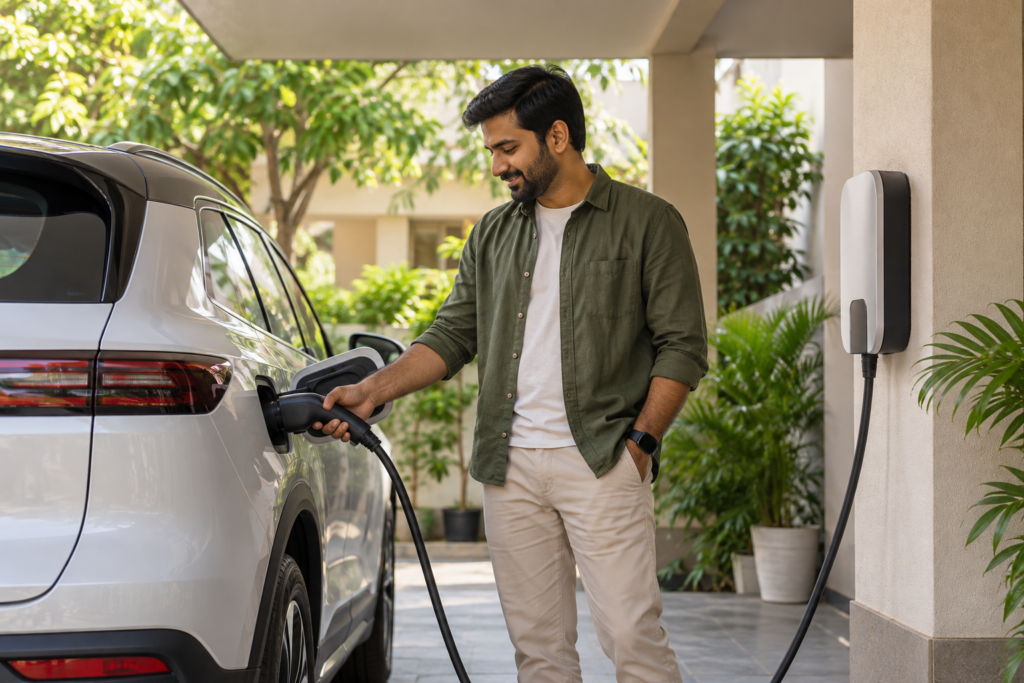
Home charging works best as a routine you can explain clearly: where the car is parked, when it is available and who may use the space. Before buying equipment, confirm access to the parking bay and any permission needed from the building owner or housing association.
The US Alternative Fuels Data Center recommends a qualified electrical contractor and appropriate certified equipment. Its voltage and charging-level descriptions reflect the US market. For India, use the vehicle manufacturer’s requirements and the applicable local installation rules instead of copying an overseas specification.
Give the Installer a Useful Brief
Write down the vehicle model, usual daily distance and the hours it normally remains parked. Explain whether the property may need a second charging point later. Ask the contractor to assess the supply and protection requirements; do not assume a convenient-looking socket is suitable.
| Planning Item | Question to Resolve |
|---|---|
| Parking rights | Who can approve the location? |
| Electrical assessment | What site work and permissions are required? |
| Vehicle compatibility | Does the equipment match the manufacturer’s requirements? |
| Billing | How will usage be measured and paid for? |
| Service | Who handles faults and warranty requests? |
Compare Convenience as Well as Hardware
A useful quote should explain the full installation scope, including any route or access work. In a shared building, agree how the cable will be kept away from pedestrian routes and how the installation will be maintained. Let the qualified contractor determine the technical design.
Connected features may be helpful, but ask what happens if the internet connection or app is unavailable. Check whether another family member can use the charger without borrowing your account. These simple usability questions often matter more in everyday life than a long feature list.
Test the Routine after Handover
Ask for an operating demonstration, documentation and a service contact. Follow the manufacturer’s instructions and avoid improvised adapters or do-it-yourself electrical changes. Keep a public-charging alternative for occasions when home charging is unavailable.
After the first few weeks, compare the arrangement with your original routine. If the car is ready when needed and the billing is understandable, the installation is serving its purpose. Treat any cost example as personal to the vehicle, tariff and travel pattern, rather than a universal saving.
Our electric car sales report explains the wider market context.
Research checked: 30 October 2026. This is an original WeActGREEN research-led article. Background: US Alternative Fuels Data Center: Charging Electric Vehicles at Home. Practical examples and checklists are editorial guidance, not measured project results. The featured image is an AI-generated illustration.